
Steam Time & Firing Time Requirements
Everything you need to know about operating experience requirements for power engineer certification in Canada.
Requirements vary by province/territory. Always verify current requirements with your regulator.
What is Steam Time?
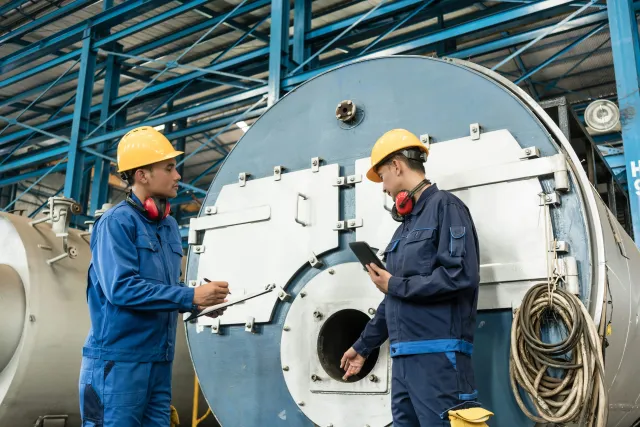
Steam time which is also sometimes called firing time or operating time, refers to the documented hours spent operating boilers and pressure equipment under the supervision of a certified power engineer. This hands-on experience is required for most power engineering certifications in Canada.
The purpose of steam time requirements is to ensure that certified power engineers have practical experience operating real equipment before being licensed to work independently at higher certification levels.
Why Steam Time Matters
- Safety: Hands-on experience ensures engineers can handle real-world situations
- Competency: Classroom learning is reinforced through practical application
- Regulatory requirement: Most provinces require documented operating time for certification
- Career progression: Higher classes require progressively more experience
Requirements by Class
Steam time requirements vary by class level and province. Here are typical requirements:
| Class | Typical Experience Requirement | Notes |
|---|---|---|
| 5th Class | Often none required | Entry-level; some provinces require minimal hours |
| 4th Class | 6-12 months (1,000-2,000 hours) | Can often be reduced with approved training programs |
| 3rd Class | 24 months as 4th Class | Must be at qualifying plant size |
| 2nd Class | 24 months as 3rd Class | Larger plant requirements |
| 1st Class | 24 months as 2nd Class | Must be at plants requiring 2nd Class or higher |
Requirements by Province
Each province has specific requirements for documenting and verifying steam time:
What Counts as Steam Time?
Not all work experience qualifies as steam time. Generally, qualifying experience includes:
Qualifying Activities
- Operating boilers and pressure equipment during normal shifts
- Starting up and shutting down equipment
- Monitoring and adjusting operating parameters
- Responding to alarms and abnormal conditions
- Performing rounds, checks, and tests
- Maintenance activities on operating equipment
- Working under supervision of a certified power engineer
Non-Qualifying Activities
- Working at plants that don't require power engineer supervision
- Office or administrative work
- Maintenance on equipment that's not in operation
- Time spent in training programs (unless specified by province)
- Working at plants below the required size for your target class
Plant Size Requirements
For higher certifications, you must gain experience at plants of sufficient size:
- 4th Class experience: Plants requiring at least 5th Class supervision
- 3rd Class experience: Plants requiring at least 4th Class supervision
- 2nd Class experience: Plants requiring at least 3rd Class supervision
- 1st Class experience: Plants requiring at least 2nd Class supervision
Plant classification is based on boiler capacity, pressure, and other factors specific to each province.
Documenting Your Steam Time
Proper documentation is essential. Here's how to track and verify your operating time:
1. Keep a Personal Log
- Record dates, hours worked, and equipment operated
- Note plant name, registration number, and boiler specifications
- Document supervising engineer's name and certificate number
- Keep copies of all documentation
2. Employer Verification
- Request official verification letters periodically
- Ensure your supervisor signs off on your hours
- Get documentation on company letterhead
- Include plant specifications and your duties
3. Provincial Forms
- Use your province's official experience documentation forms
- Submit forms with your certification application
- Keep copies of all submitted documentation
- Follow up if you don't receive confirmation
Reducing Steam Time Requirements
Many provinces offer reduced experience requirements for graduates of approved programs:
- Approved training programs: SOPEEC-approved programs often qualify for reduced operating time requirements
- Co-op/practicum: Some programs include practical placements that count toward experience requirements
- Credit for related experience: Some provinces grant partial credit for related trades or military experience
Check with your provincial regulator and training institution for specific details on experience reductions available to you.
Common Questions
Can I get steam time without being certified?
Yes. Most provinces allow you to work as an operator-in-training or assistant under supervision while accumulating experience. You typically need to be enrolled in or have completed an approved program, or be actively pursuing certification.
Does part-time work count?
Yes, part-time hours count toward your total. However, you'll need more calendar time to accumulate the required hours. Most provinces count actual hours worked, not calendar time.
Can I combine experience from multiple employers?
Yes, experience from multiple qualifying employers can be combined. You'll need separate documentation from each employer, and all experience must be at qualifying plants.
Does experience transfer between provinces?
Generally yes, documented experience is recognized across provinces through SOPEEC interprovincial agreements. However, you may need to provide additional documentation when transferring to a new province. Make sure to check with the provincial regulator of the province you are transfering to.
Tips for Gaining Steam Time
- Start early: Begin accumulating hours while studying for exams
- Choose employers wisely: Work at plants with experienced engineers who can mentor you and verify your experience
- Document everything: Don't wait until certification application to gather documentation
- Consider shift work: 12-hour shifts accumulate hours faster than 8-hour shifts
- Ask about plant size: Ensure the plant qualifies for your target certification level